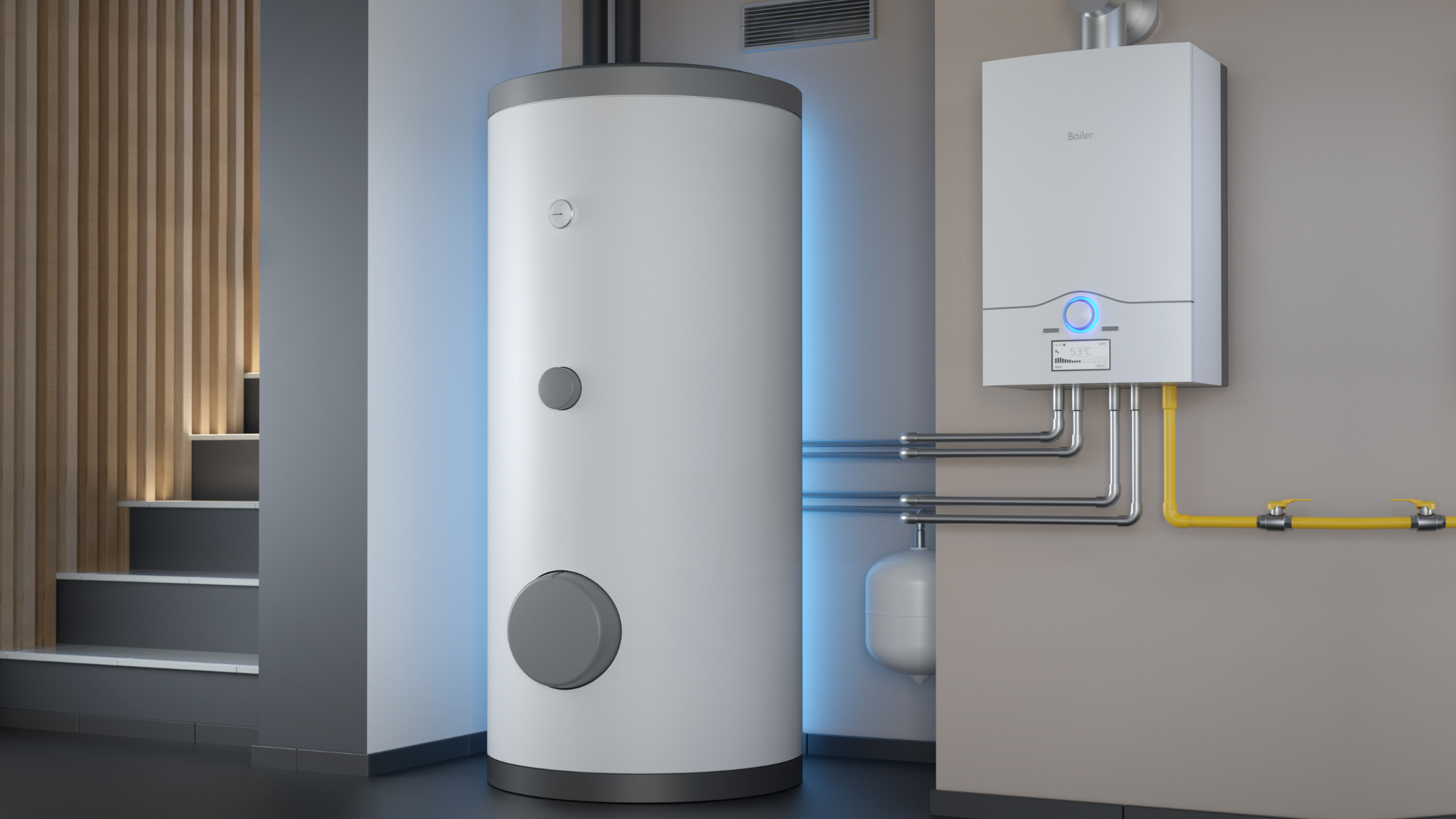
A bivalent heating system is one that uses a heat pump supplemented by an additional heating source, such as a gas boiler. The additional source is designed to provide the energy that the heat pump alone cannot generate. What is a bivalent system, how does it work, and what are the advantages and disadvantages of this solution?
Bivalent systems vs. monovalent systems – how do they differ?
In a monovalent system, a single heat source is used to provide all the heating for the building. This could be, for example, a gas boiler, a heat pump, or another heating system. The selected heat source receives no backup in the event of a failure or system malfunction, which means that in some situations the entire system may stop working. An alternative to a monovalent system is the increasingly popular bivalent system. A bivalent system uses two different heat sources that can work together. Typically, one of these sources is renewable energy, such as a heat pump, and the other is a traditional boiler (e.g., gas). In a bivalent system, one source can support the other in situations where external conditions are unfavorable (e.g., low temperatures, when the heat pump ceases to operate efficiently). This ensures a continuous supply of heat and greater heating comfort.
What are the different types of bivalent heating systems?
Bivalent heating systems can be divided into several types, depending on how the two heat sources operate. There are three main types of bivalent heating systems:
- Parallel system – in this setup, both heat sources can operate simultaneously. When the outdoor temperature is still high enough for the heat pump to operate efficiently, but the heat demand is higher, an additional heating source, such as a gas boiler, kicks in. This allows both heat sources to work together to heat the building.
- Alternating system – in this case, the two heat sources operate alternately. At lower temperatures, the heat pump is turned off, and a traditional heating system takes over heating the building. This system is more common in regions with very low temperatures, where the efficiency of heat pumps can drop drastically.
- Series system – the heat pump operates until its capacity becomes insufficient, at which point the traditional boiler takes over the heating functions entirely or partially. This system most often uses different priority levels for individual heat sources.
How does a bivalent heating system work?
A bivalent heating system operates by intelligently managing two heat sources. The main unit—the heat pump—operates under optimal weather conditions, when its efficiency is at its highest. When the outdoor temperature drops and the heat pump becomes less efficient, the system automatically activates an additional heating source to supplement or replace the heat pump’s operation. In practice, this works as follows:
- In moderate temperatures – when the outside temperature is moderate (e.g., above 0°C), the heat pump can operate with high efficiency, supplying heat to the building. During this time, the traditional boiler remains in standby mode. x
- At low temperatures – when the outdoor temperature drops below a certain level (e.g., -5°C), the heat pump’s efficiency begins to decline. At that point, a gas boiler can be activated to make up for the shortfall in heat supply. In the alternative system, the heat pump is turned off, and the boiler takes full control of the heating.
Thanks to intelligent system management, the user can be sure that the home is always optimally heated, while energy consumption is optimized for both cost and efficiency.

What are the advantages of using bivalent heating systems?
A bivalent heating system allows you to heat your home using two independent heat sources. This solution offers many advantages, including:
- full system automation: depending on the operating mode, in a bivalent system, heat pumps either shut off automatically or are supplemented by another heating source if the outdoor temperature drops below a certain level;
- increased energy independence: using two different heat sources makes the home less dependent on a single type of fuel. In the event of rising gas or heating oil prices, you can rely on the heat pump, which is a renewable energy source;
- comfort and continuous heat supply: a bivalent heating system ensures that the home is always adequately heated, regardless of weather conditions. Automatic switching between the two heat sources ensures an uninterrupted supply of thermal energy, even in extreme weather conditions.
The main disadvantage of a bivalent system is the need to purchase two heating units, which usually involves a fairly significant financial investment. However, if a lower-capacity ground-source heat pump is installed, these costs can be recouped fairly quickly.
Bivalent heating system – when can it be installed in a home?
A bivalent system stands out for its functionality and can provide complete heating comfort, making it an excellent option for newly built single-family and multi-family homes. Heat pumps are very popular due to their energy efficiency, and combining them, for example, with a gas boiler, can enhance heating comfort and ensure uninterrupted heating even at very low temperatures.
A bivalent heating system also works well when modernizing old systems, such as when a traditional boiler is replaced with a heat pump, but the homeowners decide to keep the boiler to supplement the renewable energy source.
How can we help?
Any questions? Fill in the form or give us a call.