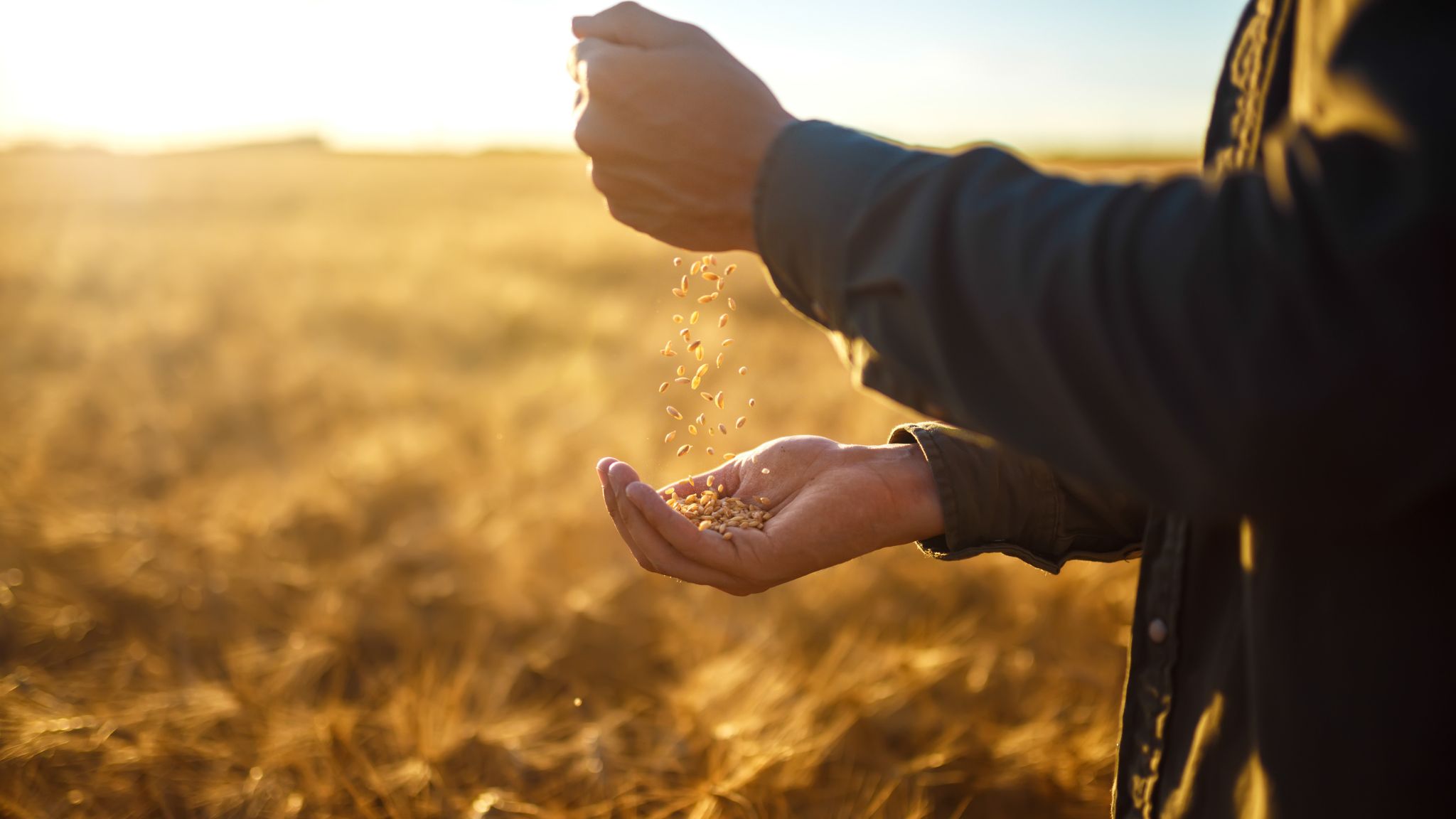
Liquefied petroleum gas (LPG) is a versatile and virtually maintenance-free solution with a wide range of applications. Thanks to its high calorific value, it can be used to heat not only homes but also warehouses, livestock facilities, and typical agricultural buildings such as greenhouses or mushroom farms. It can also power drying facilities. It is an effective alternative to natural gas, access to which may be limited on a farm.
Drying agricultural products before storage—what is this process?
In the past, the drying of grains, tobacco, or other agricultural products was done outdoors. The harvest was spread out over a large area and exposed to sunlight. Only after several hours, and sometimes even days, was it collected and stored. To streamline this process and make it more efficient, special dryers began to be built for this purpose. These are modern, technologically advanced devices that allow the drying process to proceed much faster without negatively affecting the quality of the harvest.
A well-functioning dryer is easy and intuitive to operate, and its operating costs are very affordable. However, it requires a dedicated power source, which can add extra expenses to the budget. Connecting to the natural gas grid immediately comes to mind here. But what if there is no connection or it cannot be installed for other reasons? This is where LPG tanks come in, which are just as—if not more—cost-effective, economical, and convenient than fuel.
The Use of LPG in agriculture – convenient, safe, and affordable
Liquefied petroleum gas can be easily transported and stored in various locations without major restrictions. This is the primary reason why LPG is well-suited for agricultural applications, particularly in grain dryers. Such facilities are often located in areas where there is no access to other energy sources. Propane-butane stored in a sealed tank is highly competitive with natural gas, including from an economic standpoint. There is no need to worry about industrial fees, fines for unused resources, or—on the contrary—exceeding consumption limits. In fact, users can operate LPG-powered dryers to any extent, paying only for the fuel actually used.
Powering a dryer with liquefied petroleum gas (LPG) – what are the benefits?
It should be emphasized that LPG can be used to dry any type of grain or other crop. The dryer manufacturer is also irrelevant—LPG is a universal solution. Its use makes a tangible contribution to environmental policy. The combustion of LPG does not produce any compounds harmful to the environment or humans. The only byproducts of this process are water vapor and carbon dioxide. The drying agent is clean, heated air. Grain dryers are manufactured in various sizes, and a non-heat-exchanger LPG heater with an evaporator, whose capacity is tailored to specific requirements, is used to heat the air. The grain dryer features full thermal insulation, which also helps optimize the process and reduce fuel consumption. It also turns out that LPG can be much more efficient than traditional fuels, even from trusted suppliers. It guarantees better heat recovery during drying. By choosing high-quality, clean fuel, you help extend the dryer’s service life. It positively affects the burners’ operation and keeps them in good working condition.
Mobile LPG drying facility on a farm
A mobile drying facility from a trusted gas supplier is an effective solution regardless of the type of crop. Such a facility is built using technology that is completely safe for the environment and does not negatively impact crop quality during operation. You can order the dryer even shortly before harvest, as order fulfillment typically takes no more than a few weeks. Importantly, instead of purchasing a fuel tank for a mobile LPG dryer, you can choose to lease it. This gives you not only a safe installation and high-quality fuel, but also 24/7 support from the supplier—an emergency hotline and free service. In such cases, a contract is often signed for the entire drying period at a guaranteed fixed price. This allows you to accurately determine production costs. The reliability and punctuality of fuel deliveries are also strong arguments in favor of leasing a gas tank for a mobile dryer.
LPG for crop drying – how much does it cost?
In agriculture, LPG is a fuel that is not only versatile and eco-friendly, but also helps keep costs under control. When using natural gas, seasonal dryers can prove costly due to tariff limits and penalties for exceeding them. Besides, the construction of a dryer alone involves high costs. For example, a small model with a hopper capacity of about 6 m³ and a capacity of up to 30 tons costs approximately 80,000 PLN net, and that’s not all—the budget must also account for the operating costs of the drying equipment. Liquefied gas helps reduce expenses associated with this process. It is estimated that grain can be dried using LPG-powered equipment at a cost one-third lower than when using fuel oil. Using LPG-powered equipment is cheaper, which is easy to prove.
For example, in a dryer with a capacity of 40 tons, corn with an initial moisture content of 29–14 percent is dried. To effectively dry the harvest with gas, you have to pay approx. 90.50 PLN per ton. Converted to 1 percent moisture content, this amounts to 6.03 PLN. In the case of fuel oil, costs rise to 7.47 PLN per 1 percent moisture content. It turns out, therefore, that a lack of access to natural gas from the grid on a farm does not hinder its effective operation and development. Powering grain, tobacco, or agricultural product dryers with liquefied petroleum gas (LPG) may prove to be equally, or even more, effective, environmentally friendly, and safe. If you also decide to lease a tank from a supplier.
It turns out, therefore, that a lack of access to natural gas from the grid on a farm does not prevent it from being run and developed effectively. Powering grain, tobacco, or agricultural product dryers with liquefied petroleum gas (LPG) can prove to be just as—or even more—effective, environmentally friendly, and safe. Furthermore, if you decide to lease a fuel tank for the dryer, you won’t have to worry about the continuity of the facility’s fuel supply or a sudden system failure.
Key benefits of using equipment leased from AmeriGas:
- High-quality gas and cost-effectiveness compared to electricity
- Free servicing and a 24-hour emergency hotline with a rapid response service
- Extended service life of radiators and burners
- Consistent and timely deliveries
- Hedge Fixed Price – AmeriGas allows you to sign a fixed-term contract with a price guarantee, enabling precise estimation of production costs
How can we help?
Any questions? Fill in the form or give us a call.