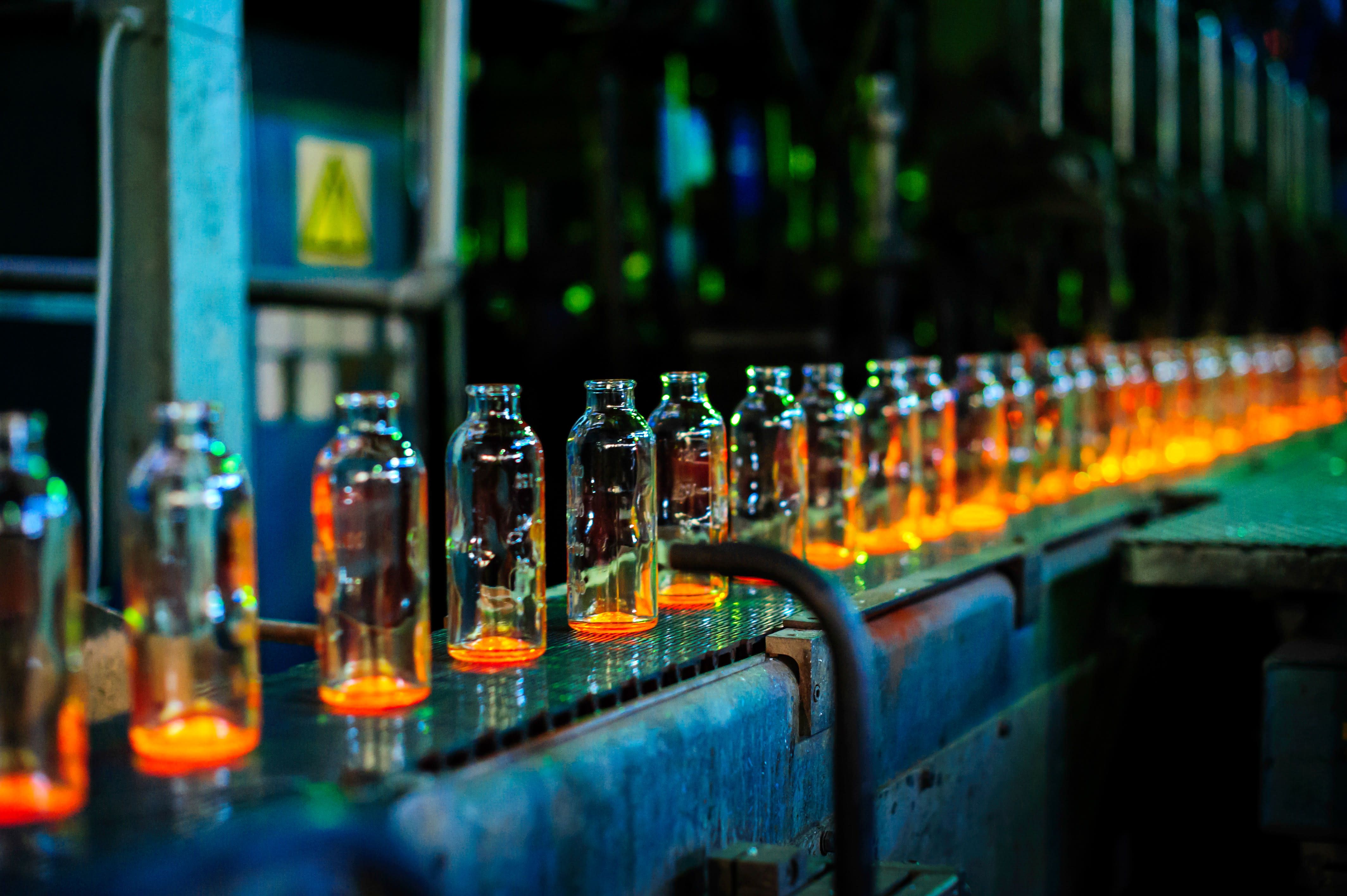
For centuries, the glass industry has provided people with indispensable products. However, glass production is a process associated with enormous energy consumption and pollution emissions. Growing environmental awareness and the need to protect the natural environment make the use of liquefied petroleum gas as an energy source in the glass industry an excellent solution.
The use of liquefied petroleum gas
The use of liquefied petroleum gas in the glass industry, however, significantly reduces sulfur dioxide emissions, thereby helping to keep the air clean. Furthermore, further processing of glass—involving its refinement, increased durability, crystallinity, or gloss—also takes place at high temperatures. An excellent solution in this case is the use of liquefied petroleum gas in tanks for melting glass in glass furnaces. This method can be used to produce everyday tableware, bottles, light bulbs, jars, glass tubes, and laboratoryware, as well as to shape, anneal, and decorate decorative glass. Similar processes are also used to produce glass wool, a popular insulation material.
How can we help?
Any questions? Fill in the form or give us a call.